
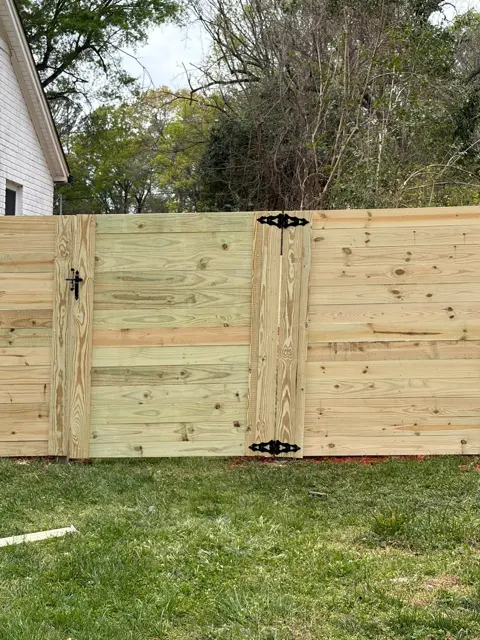
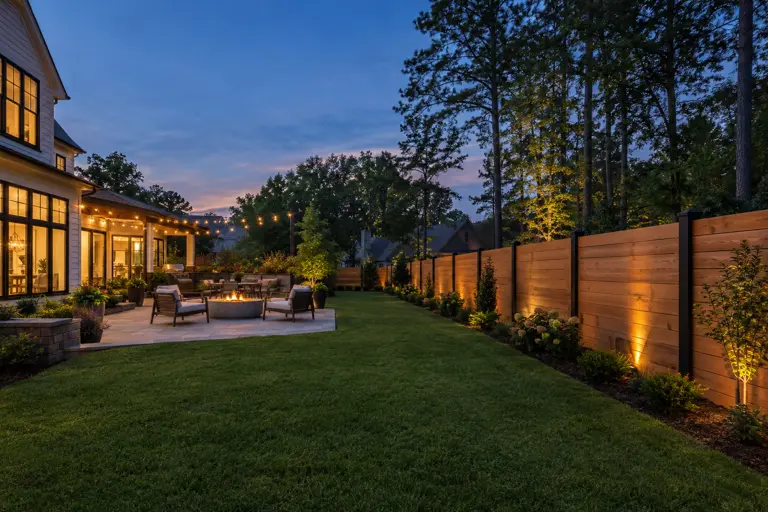
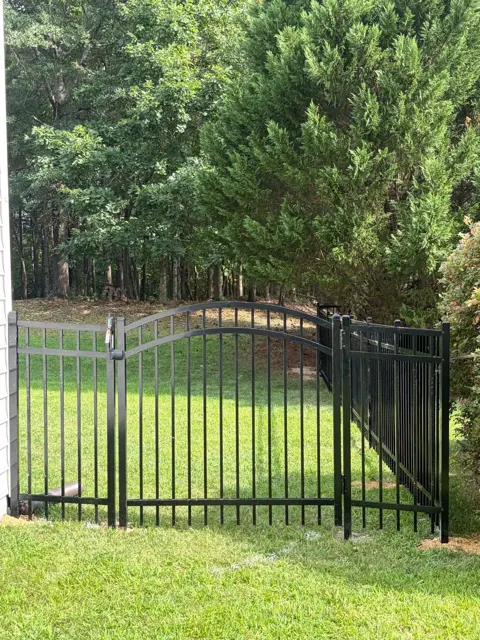
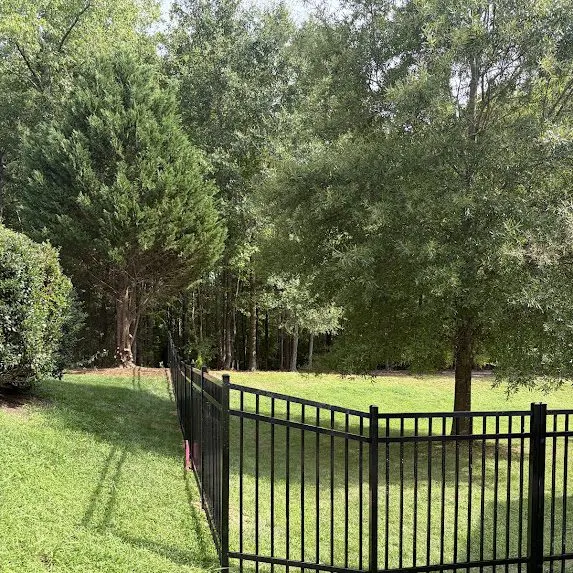

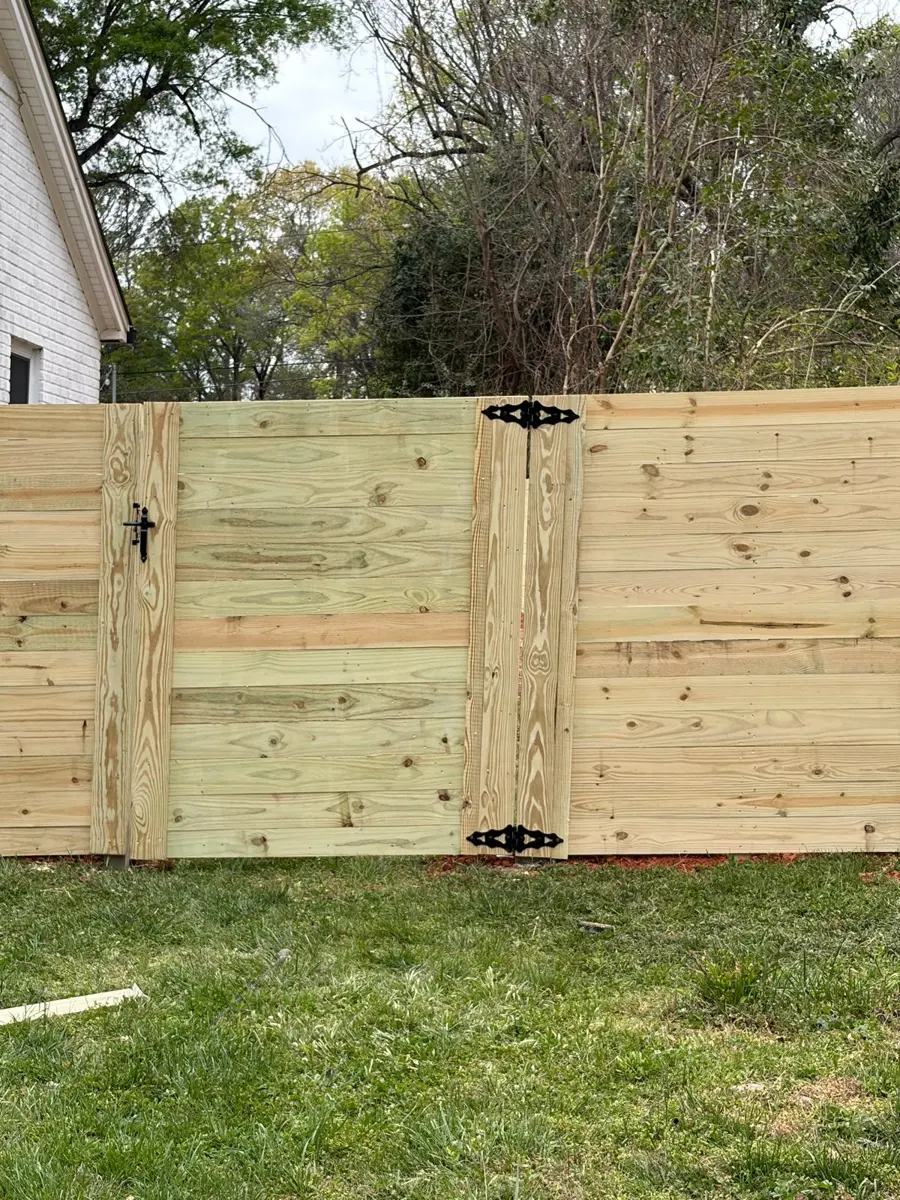
The short answer: Choose wood if you want the lowest up-front cost, the most style options or a natural look you can stain. Choose vinyl if you want a uniform, bright fence you never have to paint or stain and are willing to pay more up front.
| Wood | Vinyl | |
|---|---|---|
| Privacy | ||
| Durability | ||
| Low maintenance | ||
| Style options | ||
| Published starting rate | Starting at $20–$22 / linear ft | Starting at $28–$32 / linear ft (white vinyl) |
| Maintenance | Periodic cleaning and a stain or sealer every few years keeps wood looking its best and slows weathering. | Rinse with a hose or mild soap as needed. No staining or painting. |
| Pets | Excellent for large dogs when built solid to the ground; board-on-board limits see-through gaps. | Good for most dogs; solid privacy panels block sight lines that can trigger barking. |
| Pools | Possible for some layouts, but aluminum is usually preferred for pool barriers because of visibility. | Can be used around pools when gates and latches meet barrier requirements; confirm with your local inspector. |
| HOA | Widely accepted. Many architectural committees specify the good side facing out, a height limit and stain color. | Common in HOA communities; committees often specify white or a neutral color and a uniform style. |
Ratings are general guidance on a 1–5 scale.
Key differences
- Wood's published starting rate ($20–$22/ft) is lower than white vinyl's ($28–$32/ft).
- Vinyl needs only an occasional rinse; wood benefits from a stain or sealer every few years.
- Wood offers more styles — shadowbox, board-on-board, horizontal, split rail.
- Both deliver full privacy at 6 feet.
Still deciding?
Try both in the Design Studio, run each through the Cost Calculator, or take the 5-question quiz. Learn more about wood fencing and vinyl fencing.
Get a Free Estimate
Ron or a team member will walk your property, measure the fence line and give you a written estimate. No cost, no obligation.
